Hackathon winner
CMA CGM
designing a shuttle service employees would actually use
- Role
- Product designer, frontend developer and survey co-lead
- Timeline
- 3 weeks
- Activity
- Logistics
- Context
- Hackathon winner (Albert School x Mines Paris, with CMA CGM). Team: 2 data scientists, 1 sustainability expert.
- Tools
- Frontend, Backend, Analytics, Data, Python, Survey
The problem
CMA CGM wanted a mobility plan for its Marseille employees to cut its carbon footprint and reduce commuting subsidies. A shuttle service solves this only if people choose it, so adoption was the main risk.
My framing
The data team could find the best routes. My job was to find out what would make people take them, and design the experience around that.
Research
we only had access to managers, so we went to the employees
We had addresses and current transport modes, but not what employees thought. During the hackathon we could only speak to a few middle and senior managers, so I co-led a survey with the sustainability expert, reaching 121 CMA CGM employees in Marseille through LinkedIn. We asked whether they would walk to a pickup hub or want home pickup, how long a ride should take, and what they pay now versus what they’d pay.
Hackathon winner: co-led an employee survey and designed and built the frontend of a shuttle-adoption app within a team of 2 data scientists and 1 sustainability expert.
Within 3 weeks, our plan projected to cover 95% of 2,729 employees and cut commuting CO₂ by 83%.
What the survey told us
Findings
Most surveyed employees support a shuttle, as long as it doesn’t cost more than they pay now after reimbursement. Average public transport cost is €39.25/month before reimbursement. People would walk to a hub, up to 15 minutes. No one carpools today.
Design consequences
Pricing logic: €18.75 average willingness to pay, which is close to the real cost after the 50% reimbursement (€19.6). Co-financing scenarios for CMA CGM. Hub-based model, 500 m max walking radius. Don’t rely on carpooling; offer a better alternative.
The user flow
- 01
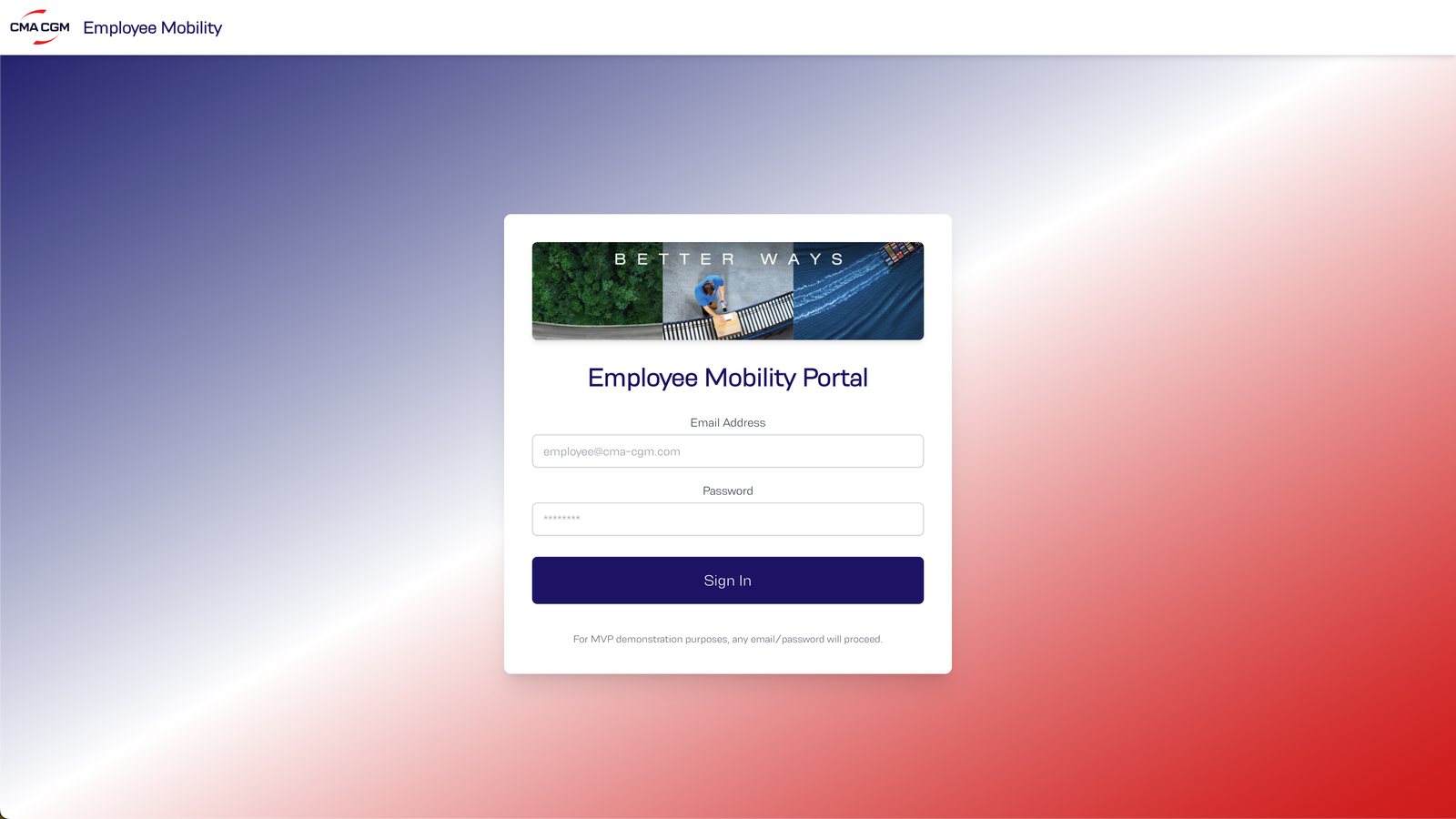
Login portal (mock)
- 02
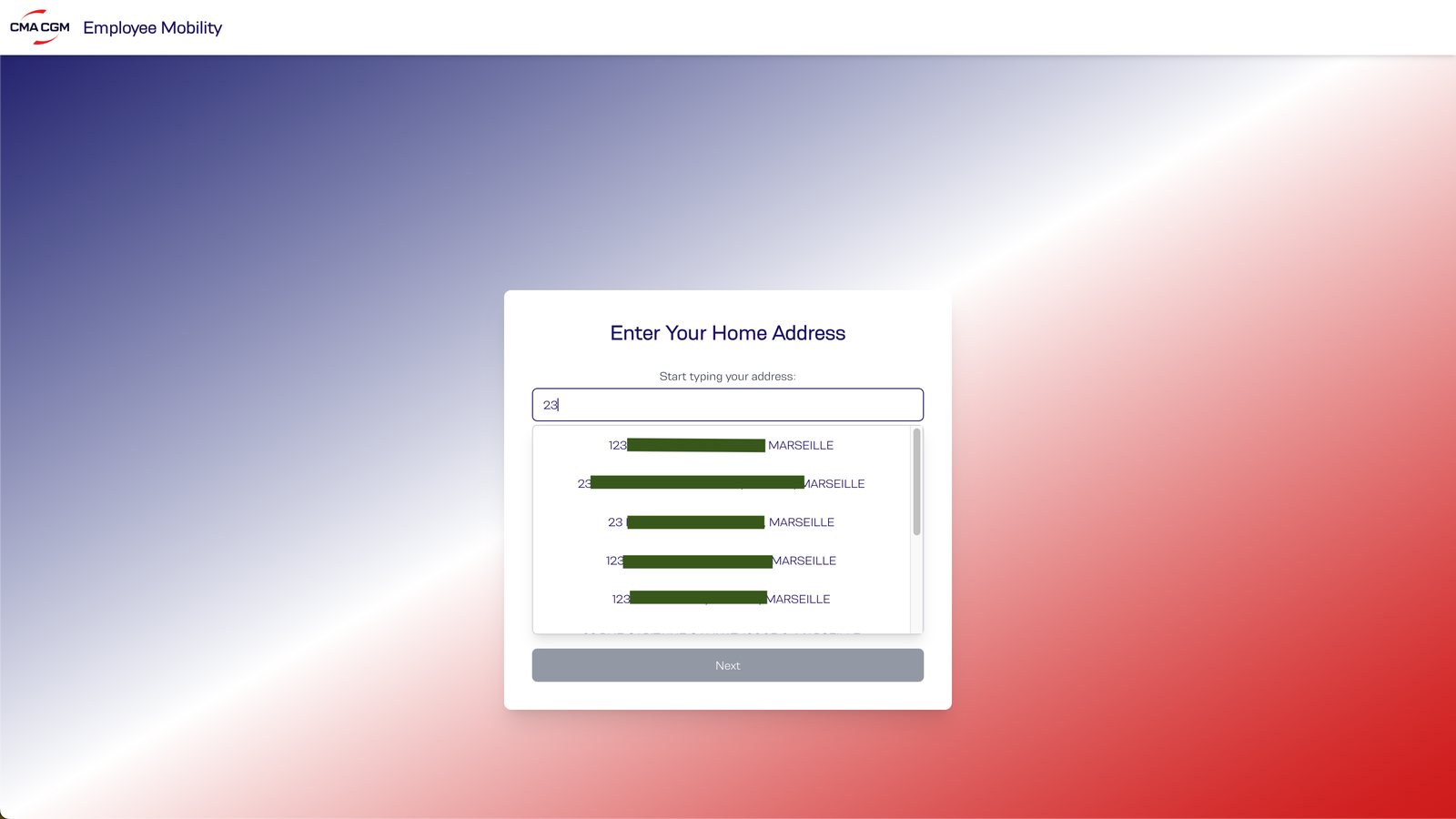
Address selection
Ideally, the address would be mapped from the employee’s account and the app would only ask for confirmation rather than selection.
- 03
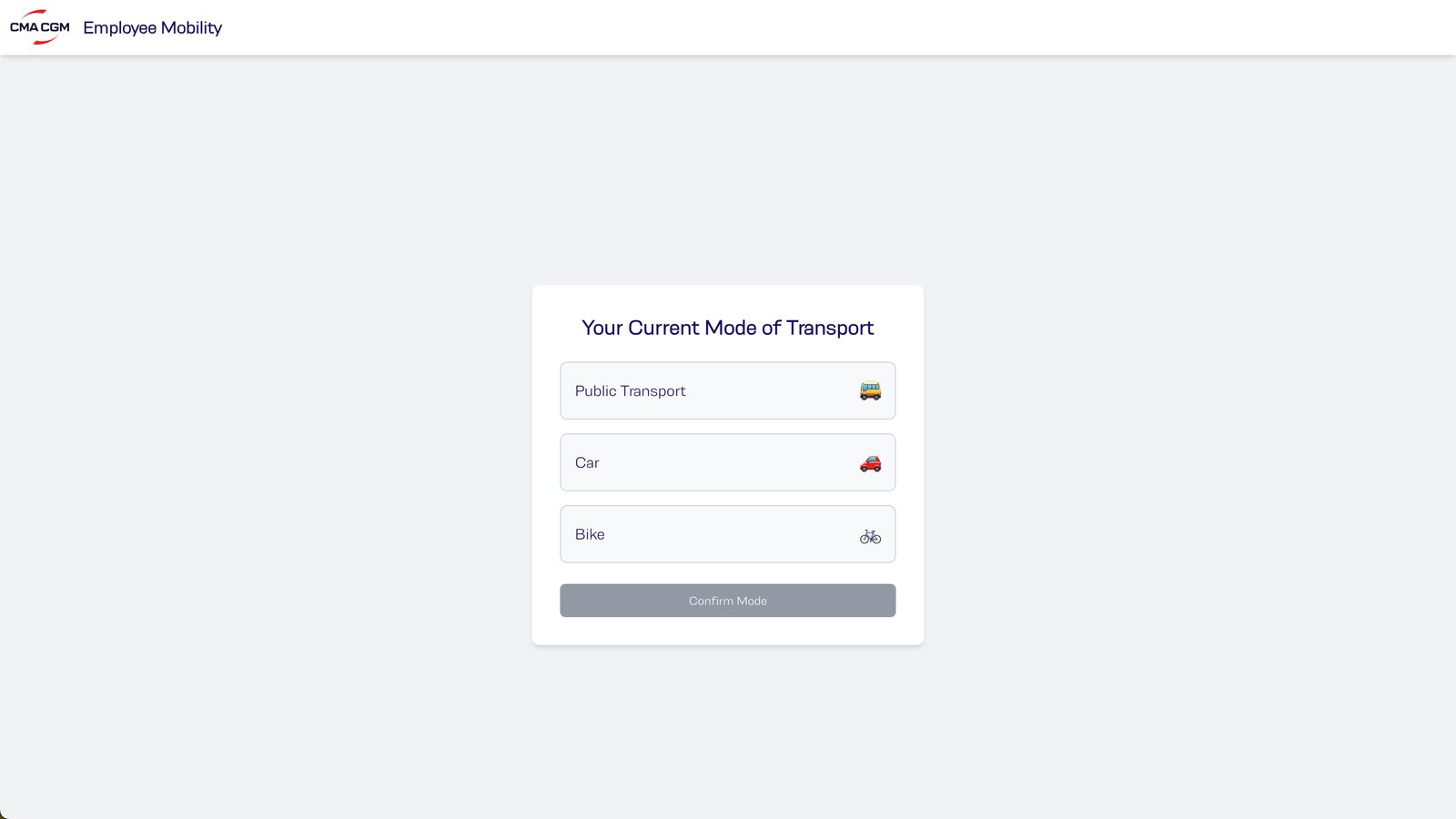
Current mode of transport
- 04
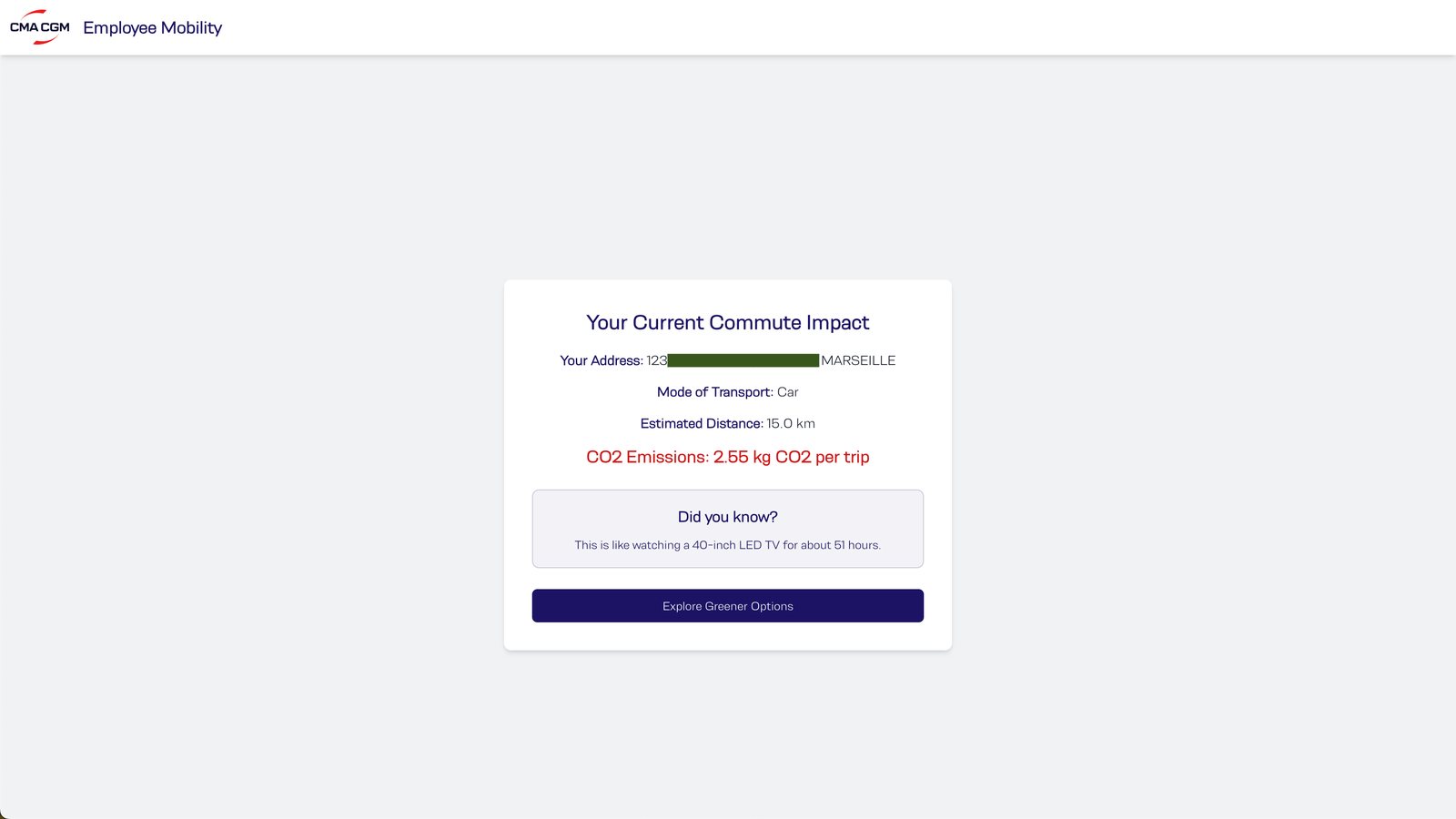
Carbon Footprint
a personal estimate with a relatable comparison (15 km by car a day equals about 51 hours of watching an LED TV). It makes the problem personal before asking for a choice.
- 05
Pickup choice
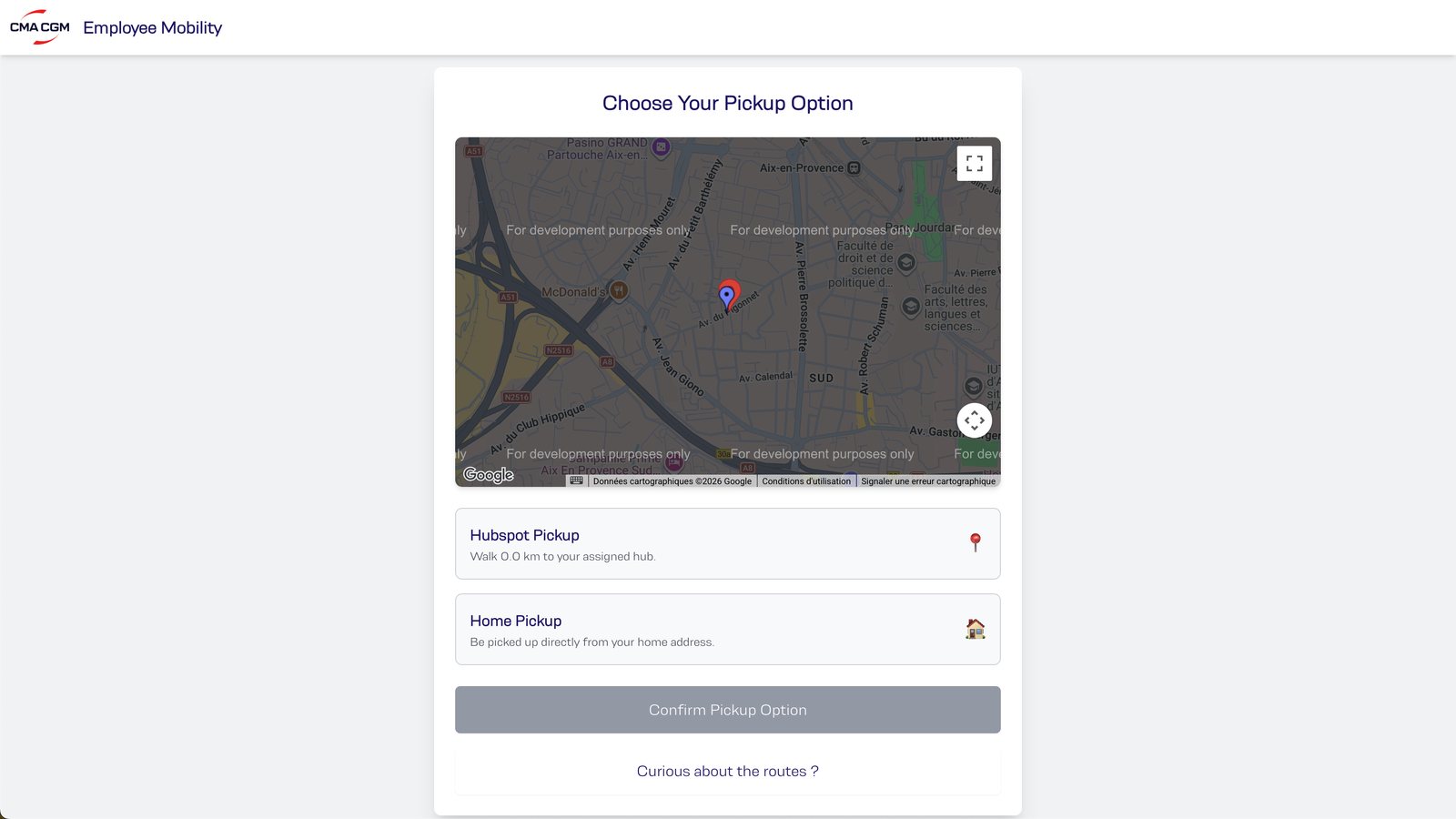
home pickup, or walk to a nearby hub with the walking distance shown. Walking under 500 m saves the company money, time and CO₂.
- 06
Review & confirm
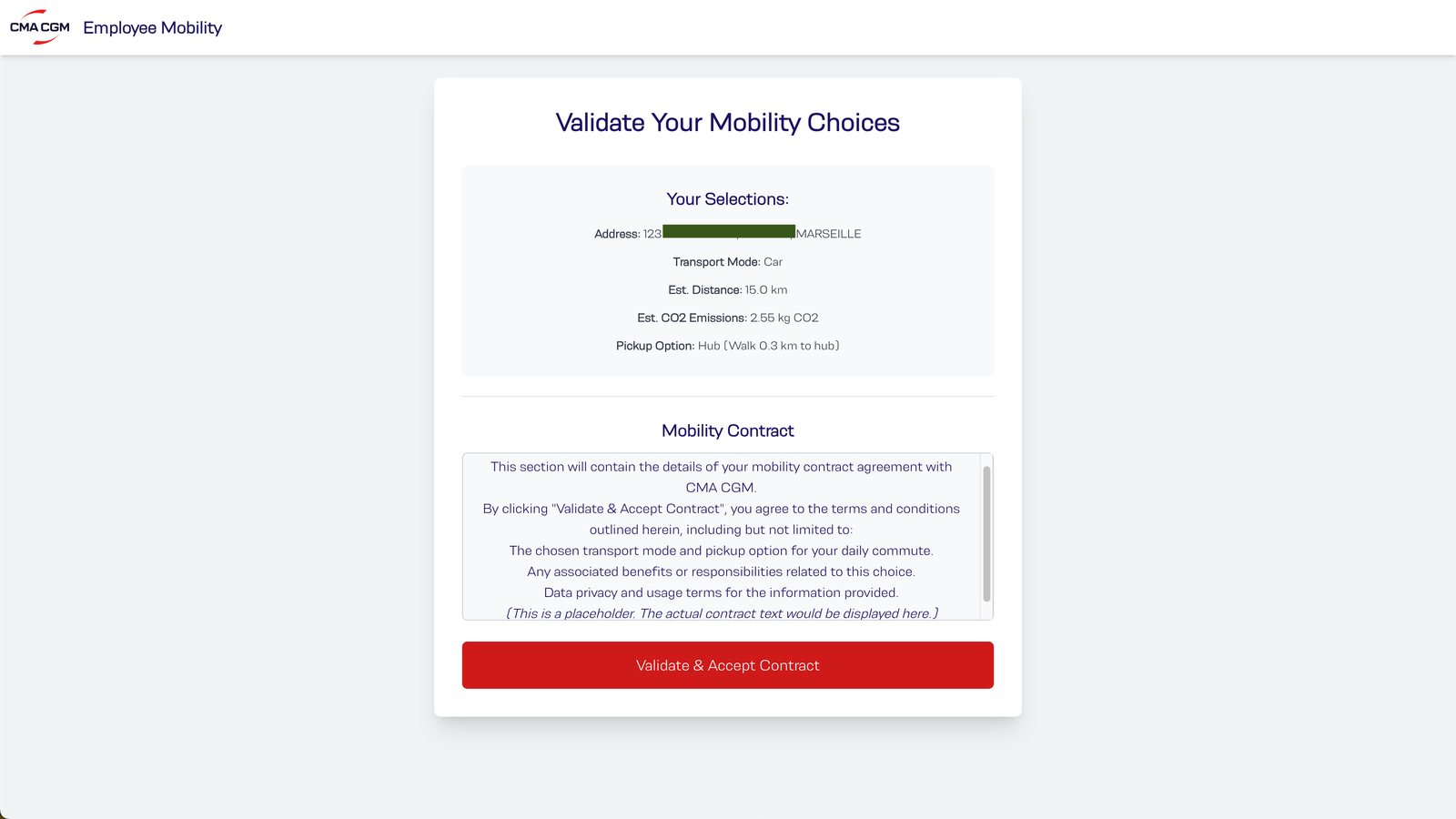
all choices summarised, plus a mobility contract placeholder so one click also completes the HR and legal paperwork.
- 07
Live tracking
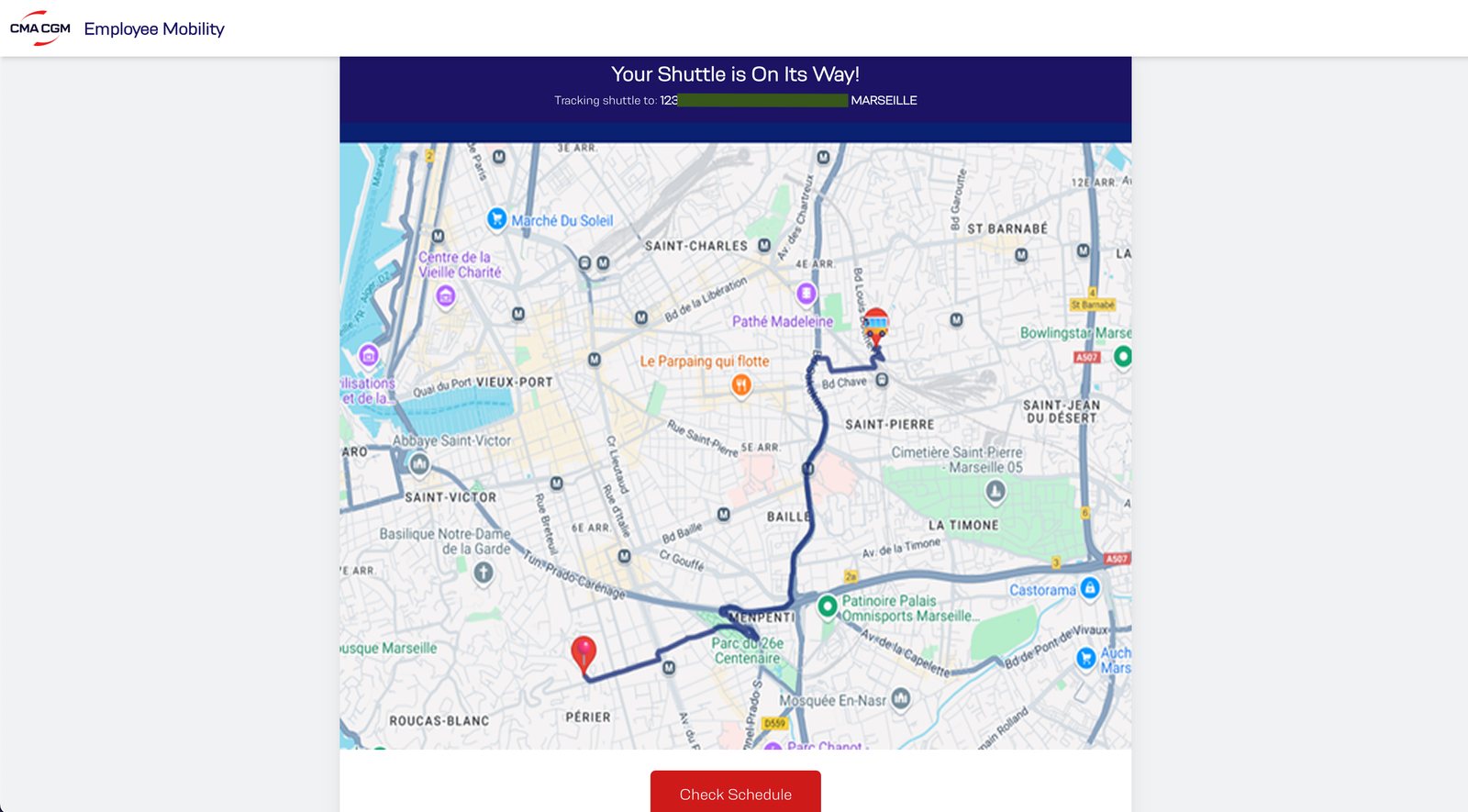
a map showing the shuttle approaching the hub with an estimated arrival, and a “check schedule” button below it. Someone waiting at a stop needs that information.
Key decisions
- Survey before build. The research shaped routes and pricing, and the app’s role: driving adoption.
- Make the impact personal. The carbon step appears before the choice, so the decision feels meaningful.
- Walk-to-hub as a choice, not an obligation. Walking time is shown up front, capped at the 15 minutes the survey supported.
- One confirmation does the paperwork. Validating in the app signs the mobility contract, so HR and Legal don’t chase people separately.
- Schedule one tap from the live map, for the moment someone is actually waiting.
Results
83.3% lower commuting CO₂ across the plan. Car commutes are 30% of trips but 60.2% of emissions. Car users who switch cut their own emissions by 88%, public transport users by 77.8%. (projected)
Coverage of about 95% of employees within the 1-hour, 15-minute-frequency model.
Jury feedback: adoption was their open question, and they said our approach showed them a proper way to address it.
What I’d do next
We ran out of time for gamification (miles or bonuses for rides). Next I would test the prototype with real employees, since we validated the plan with a survey but not the interface.